The Lesser Sabbats are Yule, Ostara, Litha, and Mabon. These are the transitional Sabbats when the seasons are turning. These are the solstices and equinoxes.
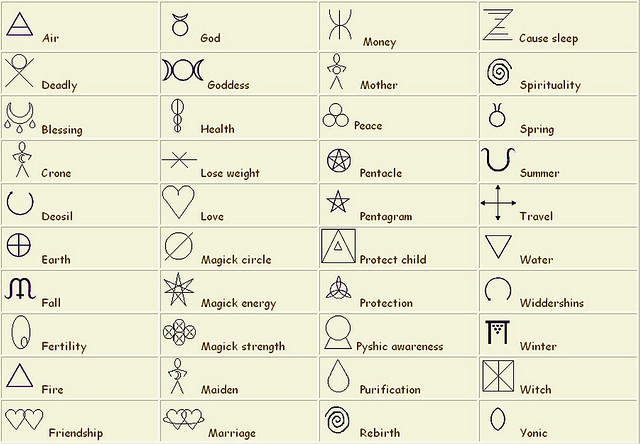
noun (sig·il) (si-jil)
1: seal, signet
2: a sign, word, or device held to have occult power in astrology or magic
It comes from the Latin and means a mark, sign, or seal.
In Wicca, sigils are said to very powerful and are designed with elements that have specific meanings. They sometimes start as a sentence of intent and are created specifically to will it into being. They can be inscribed onto objects like candles, talismans, amulets as well as other things. They can be used for many purposes like protection.
Sigils can be abstracts that are very personal to the creator and can have no meaning to anyone else, or they can be made of other symbols put together or even letters from the sentence of intent.
Historically sigils have been the equivalent of the true name of spirits and were used as such in the medieval magic. Some pratictices involved summoning angels and demons through their sigils.
Many other cultures have used sigils like the Hebrews. Their word is segula has a few meanings including talisman, folk remedy, safeguard, or superstitious action.
 |
| The sun cross |
For Many Wiccans, the Wheel of the Year is a representation of the eight Sabbats that follows the God's birth and death as the sun. Within the Wheel is the sun cross, which divides the Sabbats into their quadrants.
SKYCLAD -- This is the proper term for ritual nudity. It has absolutely nothing to do with anything sexual. It is not a requirement at all.

It is a the beginning of the Wheel of the Year and heralds the third and final harvest before winter.
This is the time when the Goddess is in Her third aspect, the Crone. She is symbolized by the waning moon. It is said that the God dies before He is reborn at Yule, the Winter Solstice. It is when those who have gone before are remembered.
It is believed that the veil between the worlds is thinned and that the dead could roam freely on the Earth. One tradition during this time was called the Dumb (Silent) Supper. As a sign of honor, a place was set at the table for the departed. The plate was filled with food for their spirit guest. The supper would be completely silent. It was believed that looking at the chair was bad luck. Also, to placate any evil spirits roaming around, food was placed on the doorstep to ward them off.
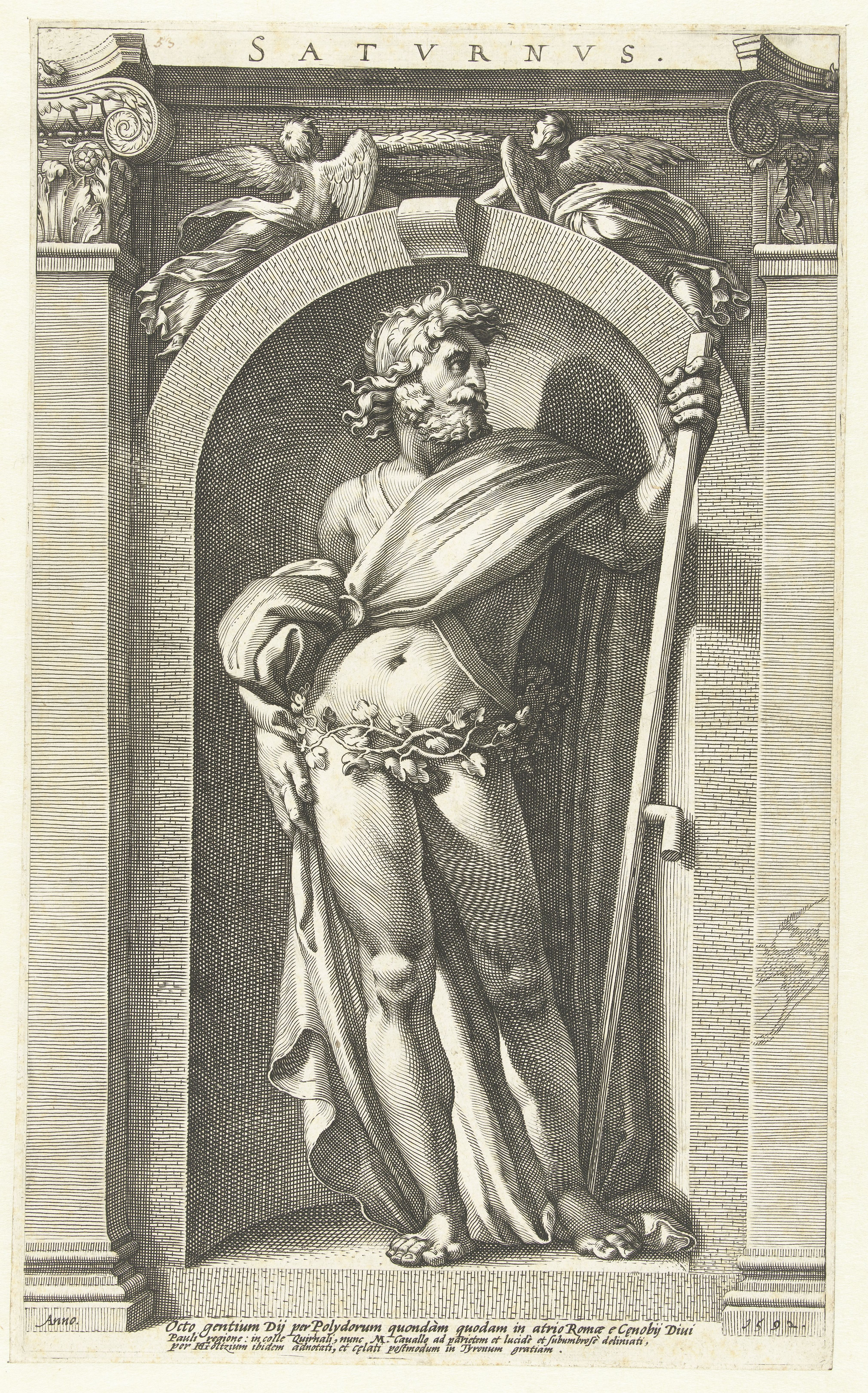 |
| Saturn |
SATURDAY -- This day of the week is named for the Roman god Saturn. He is the god of sowing seeds and later of time. He was once the supreme ruler of the gods after his father and before his son, Jupiter. He is equated with Cronus in Greek mythology. His festival, Saturnalia, fell on December 17. It was the most famous of all because this festival was the IT festival. Slaves were free to speak and sit with their masters as well as be served by them. Gifts were exchanged, which may have influenced Christmas. A 'king' was elected by dice game and was given the power over his 'subjects' and could request them to do ridiculous things.
Saturn may have roots as an underworld god that held sway over funerary rites. this can be surmised by his first consort, Lua. She was a goddess that soldiers sacrificed captured weapons to avoid misfortune.
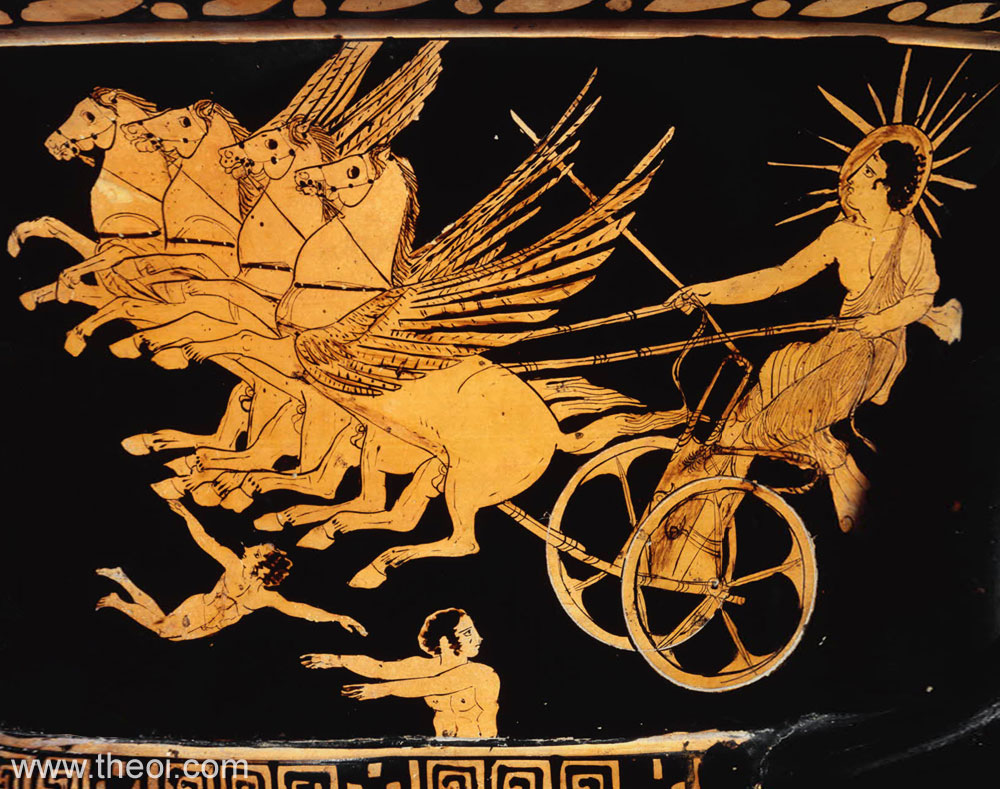 |
| Helios |
SUNDAY -- Sunday comes from the Latin dies solis. It means day of the sun. The Roman god, Sol, was similar to Helios. In many of the Romance languages it has been changed into a word that translates to "the Lord's day". Also, to note, that in Norse mythology, the sun was a goddess called (shall we guess? That's right!) Sól! Her brother was the moon. They were chased across the sky by wolves until Ragnarok.
Disclaimer: None of these pictures belong to me. I found them on Google.