Showing posts with label festival. Show all posts

Tuesday, April 28, 2015

A to Z Challenge -- X -- FLOWERS, PEACHES, AND IMMORTALITY


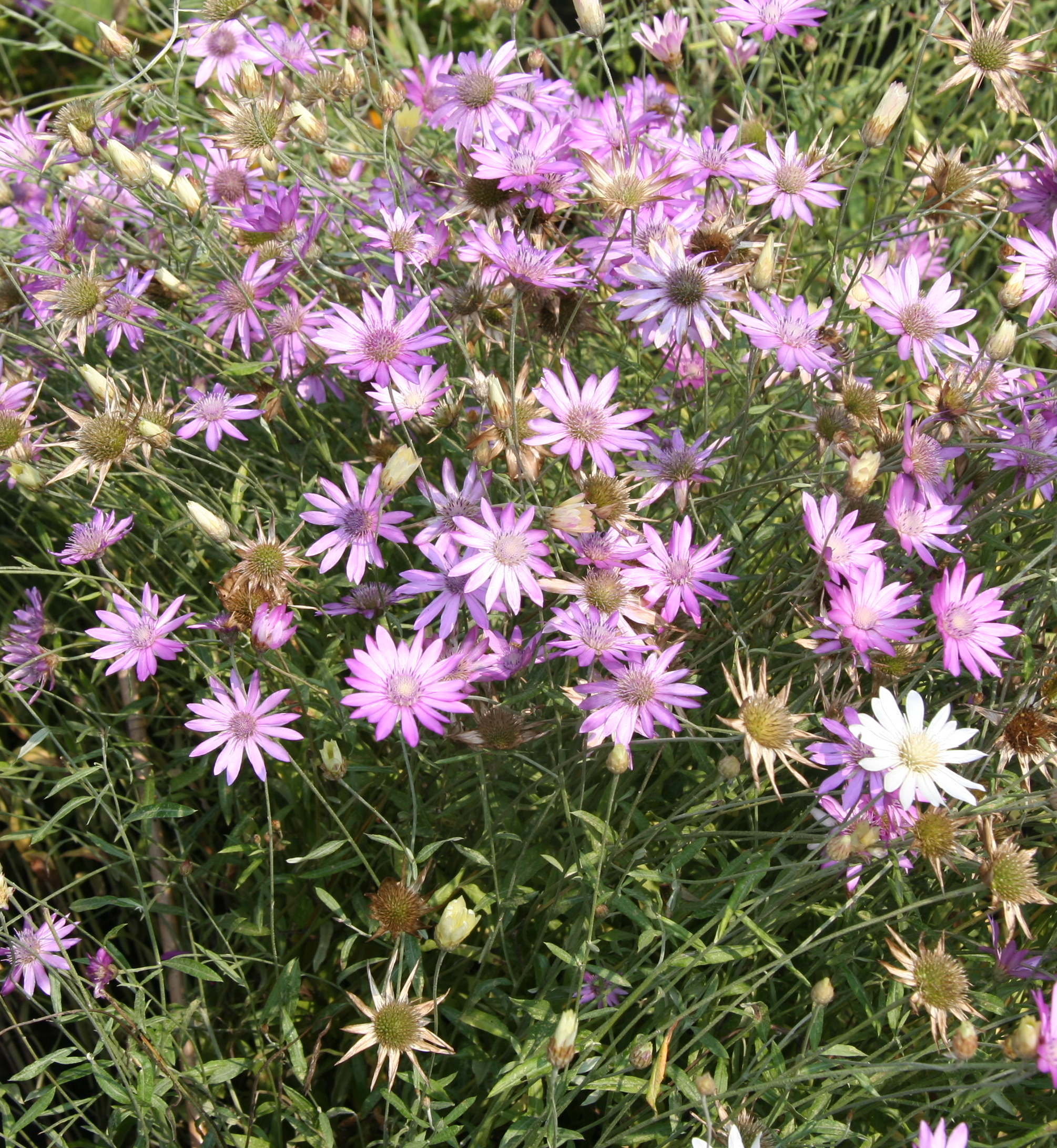
XERANTHEMUM ANNUUM -- A plant used to make besoms/brooms around Bulgaria and the Balkan regions of Eastern Europe.

 Also called the Immortelle or the Everlasting. In the language of flowers, it means Cheerfulness Under Adversity or Unfading Remembrance.

In Turkey, it was used as an analgesic burn remedy.


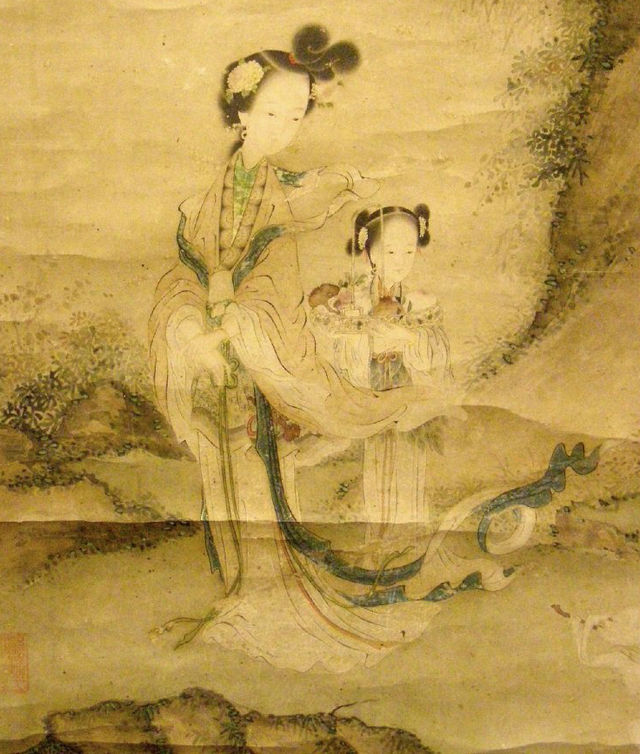
XI WANG-MU -- (Also called Hsi Wang Mu)  This is a goddess from the Chinese Taoist pantheon.  She lives in the Kulun mountains and guards the Tree, which grew the Táo Zi, the Peaches of Immortality.  (The ones Monkey stole.  The ones that only grew every 3,000 years.  Yep, those peaches.)

She is called the "Queen Mother of the West".  Her powers were almost infinite.  Her ferocious beginnings as a humanoid goddess with tiger features and tail began thirty-three centuries ago with the first recorded record of her. She was a wild goddess that brought plagues and death to the people before organized Taoism morphed her to the most powerful goddess in their pantheon, who had her own throne and controlled life and the afterlife.


XOCHIQUETZAL --  (pronouced Sho-chi-ket-sal) She is the the Aztec goddess of beauty, prostitutes, household crafts, artists (sculptors, painters, etc.), lovers.  She is also the goddess of feminine sexual power.  She was associated with flowers, but he marigold is sacred to her.

She created humans and was the intermediate between them and the gods.

Her festival was celebrated every eight years at the  end of autumn.


I was really grasping at straws with this one, but I managed to find some awesome things.


Disclaimer: None of these pictures belong to me.  I found them on Google.

Tuesday, April 14, 2015

A to Z Challenge -- L -- SOLSTICE, AXE, AND HARVEST


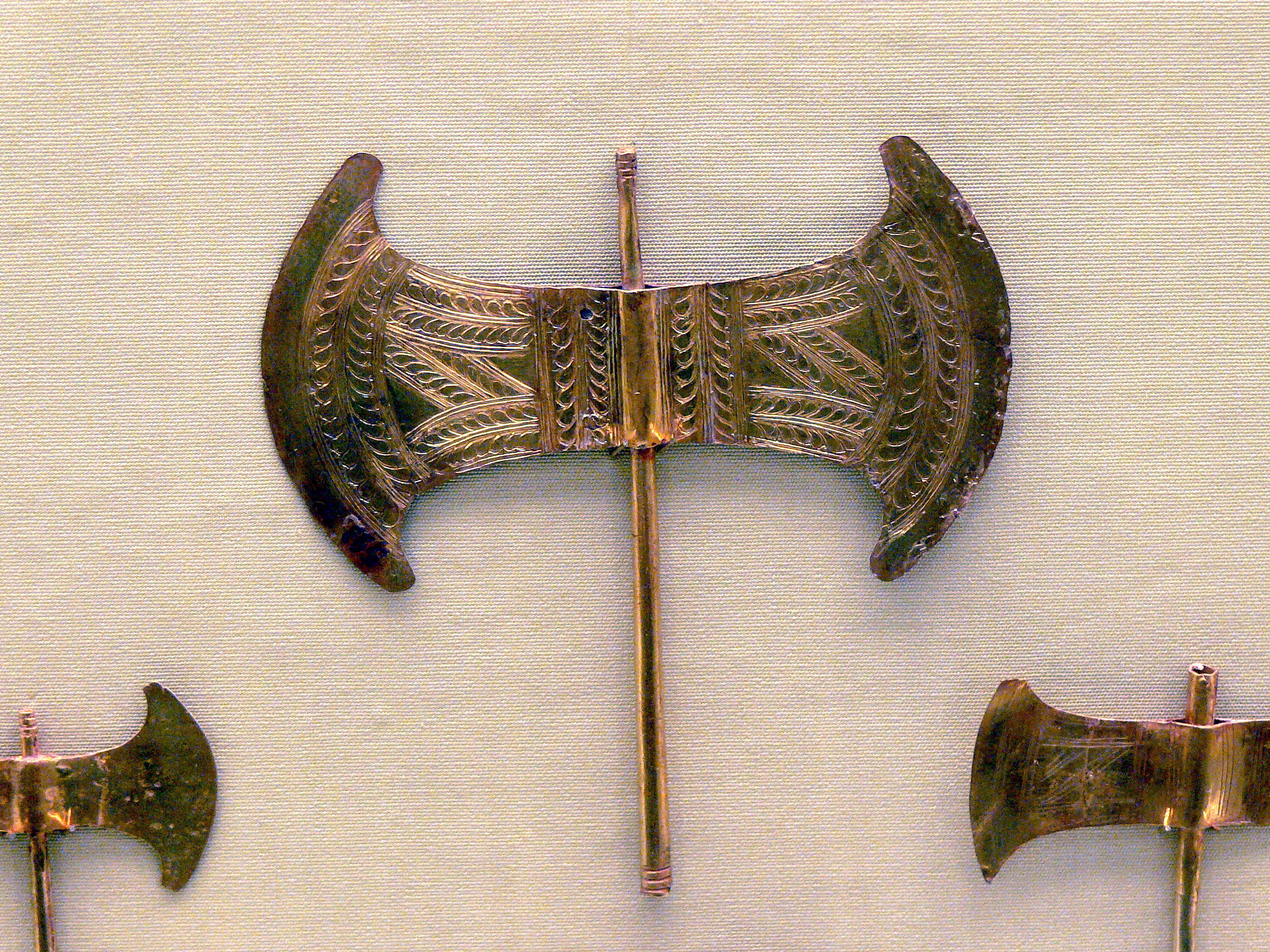
LABRYS -- The double-head axe that symbolizes the Goddess in some modern practices, but the labrys has a much older history.

In ancient Crete, the labrys was one of the holiest symbols.  It's surmised that in the Minoan culture it was a symbol of the Great Goddess. In depictions of the labrys, a woman always held them until the decline of the culture.  Then it was taken over by the Greek god Zeus.

The word labyrinth has etymological roots to the labrys as well.  The labyrinth may have a religious significance to the Minoans.  As does the bull.

The story of Theseus and the Minotaur in the labyrinth comes from these things being corrupted by the Greeks.

We may never know the full history Minoan culture and its influence on other peoples since much of their civilization is lost to time.


LADY/LORD --  Generic salutations for the Goddess and God.


LITHA -- A Sabbat that takes place on the Summer Solstice.  It is also known by the names Midsummer and Alban Heruin.  It is when the God is at his full power.  It is a turning point in the Wheel of the Year because He will lose his strength as darkness begins to return.  The Goddess blooms in pregnancy.

The land is at its greatest fertility, so marriages and magic rites are prevalent during this time.  Flowers and greenery are decorations. Bonfires are plentiful since this sabbat is connected with the God. Some leap over them to encourage fertility, purification and such.

We get the word honeymoon from marriage celebrations during this time.  The honey moon, or mead moon, where a newly married couple would drink mead everyday for a month.

The Romans celebrated Vestalia around this time.  It honored the goddess Vesta, the patron goddess and protector of virgins and the of the hearth.  She was Hestia to the Greeks.

She was not usually portrayed by statuary but was symbolized by a sacred fire. Bakers and millers honored this day by dressing their tools and animals with garlands.  The ass, Vesta's animal, was also honored.  Only women were allowed into the temple at this time to worship.  They made offerings to Vesta.


A Corn Doll
LUGHNASADH -- This sabbat is the celebration of the first harvest, taking place around July 31 or August 1.  It is when the God has aged.  The sun wanes and the fields give up their bounty.

Lughnashadh (pronounced ) was named after the sun god, Lugh.  In Irish mythology, he created a festival to honor his dead foster mother Tailtiu.  The funeral feast and games inclued match making and trade.

In later times, corn dollies were made (and still are) made of the last sheaves of corn or whatever grain was harvested.  They represented the spirit of the grain.

Also called Lammas, which translates to 'loaf mass'.  It was the medieval celebration of first harvest.

Grain has been a key worshiping tool for all ancient cultures.  They may vary in traditions, but they all knew the importance of their harvests and wanted to keep the local gods/goddess appeased and the land fruitful.


Disclaimer: None of these pictures belong to me.  I found them on Google.

Friday, April 10, 2015

A to Z Challenge -- I -- CLEANING, CANDLEMAS, AND CALLING


The Triple Brigid
IMBOLC --  (Pronounced immehlk, also Imbolg)  This is Sabbat takes place around February 1st or 2nd.  It is a celebration that honors the coming spring.  It is a time when the Crone becomes the Maiden once more, while recovering from the birth of the God.

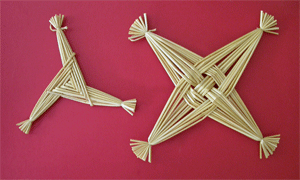
Brigid's Cross
It is a time of sweeping away the old and heralding the new.  Think of it as spring cleaning. It is also the time when animals are pregnant or ready to drop young.

Imbolc etymological roots in Irish means 'in the belly'.

It is also called Brigid's Day (Pronounced breed)  She is one of the Major Irish goddesses.  She is considered a triple (or threefold) goddess, but not in the aspect of maiden, mother, crone.  Instead, it's morely likely she was three sisters of the same name.

 She is associated with Poetry, Childbirth, and Smithcraft.  She had Brigid's crosses are made as symbols of protection and prosperity for the coming year.


INVOCATION --  This is to invite power or a deity within you or it is to ask for something.  For example, drawing down the moon is to take in the Goddess or Her power into yourself or performing a invoking chant to want the gods to aid you in protection.

This is opposed to evocation.


Disclaimer: None of these pictures belong to me.  I found them on Google.
Thursday, April 2, 2015

A to Z Challenge -- B -- BROOM, FERTILITY, AND PERSECUTION


BESOM -- This is the classical witch's broom.  It is used to cleanse an area of negative energy before casting a circle.  They were originally used as ordinary brooms.  In some places, they are still used as such.  The besom's staff is made of ash, the bristles are birch twigs, and they are tied together by thin willow wood strips.  Besoms were and are used in Handfasting ceremonies because it both thought to be feminine and masculine.


BELTANE -- (Pronounced bell-tayn, Beel-teen)  This Sabbat is also known by the name May Day.  It is a celebration of fertility.  To celebrate the fertility of the land, many would gather around balefires, dance, and well, . . . you know.

It symbolizes the sexual union of the Goddess and God.  Also, the Celts revered the the sun god, Bel.

The Romans had a festival called Floralia, which is for the fertility goddess Flora.  It was similar to May Day, where flowers, dancing, and revelry were used to honor Her.

People still celebrate Beltane and May Day.  Dancing around the May Pole is still popular.  Just so's ya know, the May Pole is symbolic for a man's manly bits. Some places have the May Queen choose the May King (Green Man, Jack-in-the-Green, or one of many names) and they are married albeit symbolically or truly handfasted.  They are the physical representation of the God and Goddess union.


BURNING TIMES -- This is a reference for when many people were tortured and burned.  More of them were women and children.  I'm not talking about just the Spanish Inquisition.  They had their share, but there were other times when so called witches were persecuted.  Let's just say that many of them were innocent and falsely accused.


 BOLINE/BOLLINE -- This is the the working blade. This knife is used to prepare herbs, cut string, and many other physical tasks. They can be both straight or curved.  They are sometimes on the altar.


Disclaimer: None of these pictures belong to me.  I found them on Google.
Friday, October 31, 2014

HALLOWEEN BLOG HOP 2014 -- SAMHAIN


SAMHAIN (pronounced sah-win, sow-in, sah-vin) is a Celtic word that means "summer end".

Blog that has Wheel of Year image
It is a the beginning of the Wheel of the Year and heralds the third and final harvest before winter.

In pagan and Wiccan religions, this is the time when the Goddess is in Her third aspect, the Crone.  She is symbolized by the waning moon.  It is said that the God dies before He is reborn at Yule, the Winter Solstice.  It is when those who have gone before are remembered.

It is believed that the veil between the worlds is thinned and that the dead could roam freely on the Earth.  One tradition during this time was called the Dumb (Silent) Supper.  As a sign of honor, a place was set at the table for the departed.  The plate was filled with food for their spirit guest.  The supper would be completely silent. It was believed that looking at the chair was bad luck.  Also, to placate any evil spirits roaming around, food was placed on the doorstep to ward them off.

Another tradition happened to be to wear a mask if one had to travel on that night.  It was to fool the spirits.

Where I found Pomona image
Even the Romans had similar traditions that were incorporated into Samhain.  Feralia -- when Romans commemorated the passing of the dead, and Pomona -- when the goddess of fruit and trees, Pomona, was honored.
Many use this time for divination.

As Catholicism spread, the church kept some of the practices from the original.  It was when All Soul's Day came about as well as the name All Hallow's Eve (Halloween) or All Saint's Day.

Interestingly Dia De Los Muertos has similar rituals as Samhain although it was an Aztec holiday.  It boasts of honoring the dead, spirit visitation, and the offering of food.

Originally it was a month long
Where my Google search found this image
celebration around August honoring the goddess Mictecacihuatl.  The Aztec were definitely not shy about the dead.  When Catholicism reached them, it was moved to the same time as Halloween.


Saturday, August 2, 2014

O.L.L.E. HOW I LOVE THEE!!!

Today my family went to the park.  Not an unusual occurrence, true, but this weekend is special.  Today is the annual Frontier Days weekend.  There all various booths from out of town and local selling things  Community parade, games, competitions, and all sorts of things.

Every year,  for I don't know how long, my family waits for this event because of our favorite booth: the O.L.L.E. stand.

What is an O.L.L.E.? you ask.

It is a drink.  It's a combination of lemon, lime, orange juice (fresh from the fruit) with ice and maraschino cherries.  Or mana from heaven.

 With the sun beating down and the temp at 90+ degrees Fahrenheit (32+ Celsius), it is the most fantastic tasting thing.  So refreshing.

I drool thinking about it.

What's great is that they have cups that you can buy and then reuse every year.  It drops the price of a large drink by a dollar fifty.

Also, they have plain lemon, lime, or orange ades.  And you can get them sans cherries too for a more  tangy flavor.

Well, all I can say is that I'm dosed up on vitamin C.

And I can't wait to do it again next year!