Showing posts with label month. Show all posts

Wednesday, April 15, 2015

A to Z Challenge -- M -- HUNTER, CRESCENT, AND FULL


MABON -- This Sabbat falls on the Autumn Equinox.  It is the second harvest.  The God grows old and is preparing for his death at Samhain.

The stories of Mabon ap Modron, the Welsh God, and of Demeter and Persephone are associated with this time.

Dionysus, the god of wine and revelry, is also a fertility god and of the the harvest.  One myth about him, tells how he was destroyed by the Titans, except his heart, and was resurrected when Zeus gave the heart to Semele to eat, whereupon she gave birth to him anew.  This reflects the same cycle seen in the Wheel of the Year.


MAIDEN --  The first aspect of the Triple Goddess in Wicca.  She is represented by the waxing crescent moon.  She is fresh and youthful and in the first blush of womanhood.  Associated with Spring, the Maiden is beginnings and ideas, potential, and newness.


MALLEUS MALEFICARUM -- Translated it means the The Witches' Hammer.  Written in 1484 by Heinrich Kramer and James Sprenger, two Inquisitors.  Under the Bull of Pope Innocent VIII, this document was a guide to questioning, when torturing was necessary, trying, and sentencing those accused of witchcraft.  It also included how to spot signs of witchcraft and demon possession, how to cure those inflicted with spells, how to protect themselves from spells, and a host of other information for the professional witch hunter, Inquisitor, or magistrate.  It was in use for three centuries or so in the persecution of those falling within their grasp.


MARCH -- March began the Roman year.  It was when military campaigns renewed after the break in winter.  Martius translates to (month of) Mars.  Mars being the Roman god of war.


MAY -- Named after the Roman goddess Maia, who is the goddess of spring growth.

MOTHER --  She is the second aspect of the Triple Goddess.  She is in her prime in all things: fertility, ripeness, sexually, and power.  Most times, She is pictured pregnant to symbolize this richness.  The full moon represents Her.
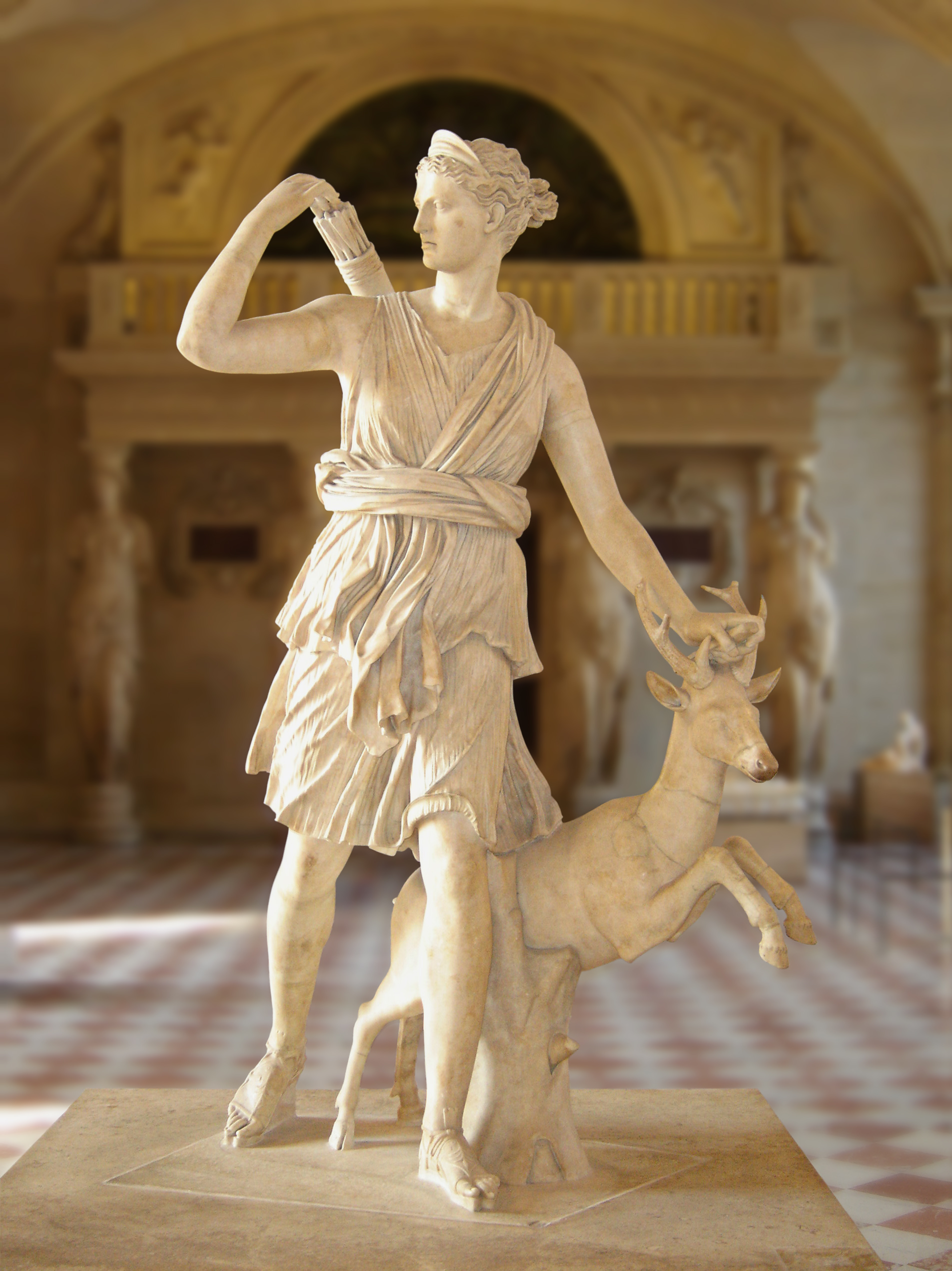
Diana
MOON --  The moon has been studied, worshiped, and used as a means of time telling for just about every ancient culture. Many used/still use the lunar calender, including Ancient Egyptians, Chinese, and Greeks to name a few.  Others used or changed to a lunisolar calender.

The varying gods and goddess for the moon run across all the mythological pantheons: the Egyptian Thoth, the Roman Diana, the Greek Selene, and the Japanese/Shinto Tsukuyomi-no-Mikoto.

Many modern day Wiccans have the Triple Goddess or the Maiden, Mother, and Crone.  The Maiden is the waxing moon, the Mother is the full moon, and the Crone is the waning moon.


MONDAY --  The name of this day comes from the Old English monandaeg from the Latin dies Lunae,which translates to day of the moon.


Disclaimer: None of these pictures belong to me.  I found them on Google.

Saturday, April 11, 2015

A to Z Challenge -- J -- NEW YEAR, MARRIAGE, AND MONEY


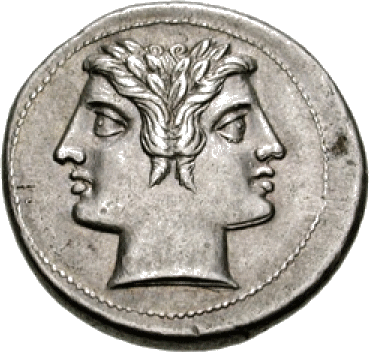
JANUARY --  Named after Janus, the god of doors, gates, transitions, beginnings and endings.  He is a god with two faces; one looked back while the other looks forward.

He was the beginning and end of conflict for the Romans.  His major temple in Rome was a key indicator if they were at war or peace.  At war, the doors of the temple were open, while the doors would be closed when they were at peace.  Let's just say that those doors didn't close very often.

His image came in different ways.  Sometimes one face would have a beard while the other did not, or they could both be bearded.  In some places he had four faces.  Plus, his image is on coins because in some stories, he introduced money.


JUMPING THE BROOM -- This tradition has been carried out for many centuries.  It may have been before even handfasting.  The Welsh tradition of priodas coes ysgub (broomstick wedding) might have come from the Romany (gypies) of Wales before it spread to a country-wide tradition.  The broomstick would be set in the doorway at an angle.  The couple would jump over the broom together, but if the broomstick was touched the marriage was considered invalid.

The besom is used for the modern tradition.  It's a way to star a marriage with a clean slate.  In other words, to jump the broom is a meaningful way of starting life together with the past swept away.  Usually it takes place after the wedding ceremony.

Historically, in Antebellum America, plantation slaves used this as a way to marry since they had no legal means of taking their vows.  Whether it came from their white masters or from their own countries of origin is still debated.


JUNE -- Named for the goddess, Juno (aka Hera).  She was the wife/sister of Jupiter (aka Zeus).  She was the patron goddess of marriage and women.  She is one of the principle goddesses of the Roman pantheon.

The protecting guardian spirit of females was called a juno, which was a genius (aka family ancestor from the underworld originally). There were different ones for virgins, married women, marriage, and brides.


Disclaimer: None of these pictures belong to me.  I found them on Google.

Tuesday, April 7, 2015

A to Z Challenge -- F -- WOLF, GODDESSES, AND FLAMES


FAMILIAR -- Familiars can be animal of the physical or astral plane.  It can be a spiritual ally. Familiars are very distinct and individualist to a coven or practitioner.  They can help raise energy in a circle.  A bond exists between the the familiar and the individual.

Similar beings from shamanic teachings and other ways.  Totems, animal guides, and spirit guides are only a few of the names.

There are subtle differences between all of them, but it basically boils down to:  a physical or nonphysical entity that guides and protects.

They were demonized by the church.


FEBRUARY -- The name February comes from Latin origins.  It is comes from the Roman month Februarius or "of Februa".

During this time around the 15th, a festival called Lupercalia was held. Presided over by the Luperci (brothers of the wolf, a sect of priests).  This festival incorporated the story of Romulus and Remus, the twin founders of Rome.  It honored the she-wolf that suckled them as infants.

Luperus (Pan for the Greeks) was the god associated. The februa were strips of goat skin that were smacked against the people.  For women and girls, to be hit by one was an insurance that they would be fertile.  So it was also a fertility rite.

Later the Februalia was also incorporated.  This was a ritual purification associated with washing with water since spring was a very rainy time of year.


FIRE -- Fire is one of the four Elements.  It's cardinal point is South.  Fire is associated with the color red.  Candle, sun, love magic are all represented by fire.  It is masculine and a projective element.  It is both a destructive and rejuvenating element.  Fire magic is used to banish negative influences in your life or to purify.  The incense censor is the tool usually associated with it, but a candle is used to represent the element upon the altar.


“Freyja and the Necklace” by James Doyle Penrose (1890)
FRIDAY -- Friday is named for either the Norse goddess Frigg/Frigga, Odin's wife and goddess of marriage, love, and destiny or for the Norse goddess Freya/Freyja.  She is the goddess of love, sexuality, war, death and a few other things as well.  She also received half the dead collected.  They went to Fólkvangr.  Odin received the other half who went to Valhalla.

There is debate as to whether Frigg and Freya had a common link or are the same goddess earlier in the history.


Disclaimer: None of these pictures belong to me.  I found them on Google.

Wednesday, April 1, 2015

A to Z Challenge -- A -- BLADE, BREATH, AND CARD


A Symbol for Air
AIR -- One of the four Elements.  It is associated with the East. The color that is associated with it is yellow.  The wand is the ritual tool that is associated with it.  Wind magic, divination, travel, and intellectual/mental stimulation are all ruled.  Psychic powers, dreams, and wishes are also associated with this element.  On the altar, a feather is the most usual symbol placed there because winged animal and insects are represented by this element.  It is a projective element.  It is masculine in nature.

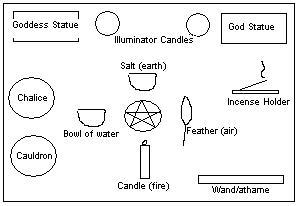
ALTAR -- This is the one of the most basic things. It's the place where ritual tools are set to perform ceremonies, sabbats, and esbats. Most altars are split into three sections. The left for the Goddess, the right for the God, and the center is usually a working area belonging to both.  Elemental representations can also be found in the central area.  Most altars are set up facing North or East.  They can be as elaborate or as simple as desired.

AMULET -- This is an object used to deflect specific (like negative) energies away from a person.  It's used as a protective object that is magically charged.  Many things can be an amulet including stone, wood, sachet of herbs, and a host of other things.  It all depends on what is needed to be deflected.

APRIL -- This comes from a Roman word Aprilis and perhaps refers to aperire. It means "to open" in Latin, which most likely means the opening of buds and blossoms. Plus, it may refer to Aphrodite a.k.a. Venus. This was the time of fertility. The Veneralia was celebrated by the Romans on the first. It honored Venus.

ATHAME -- Pronounced ah-Tham-ee, Ath-ah-may, ah-Thaw-may.  This is a ritual tool.  This knife is usually double edged and most likely will have a black handle.  It is consecrated and cleansed of negativity before use.  It is never, never used to cut physical objects. It is one of the symbolic God items and therefore usually placed on the right side of the altar.  

ARCANA -- This is what the two halves of the tarot deck are called.  There are 22 major arcana (e.g. The Tower, The Lovers, The World) and 56 minor arcana.

There are four suits in the minor arcana. Cups, pentacles, swords, and wands are the most recognized ones, but there can be named differently.  For example, wands can also go by rods, staves, or spears.

They predate the modern playing card decks, but a modern 52 card deck can be used in a similar fashion as tarot.


Disclaimer: None of these pictures belong to me.  I found them on Google.